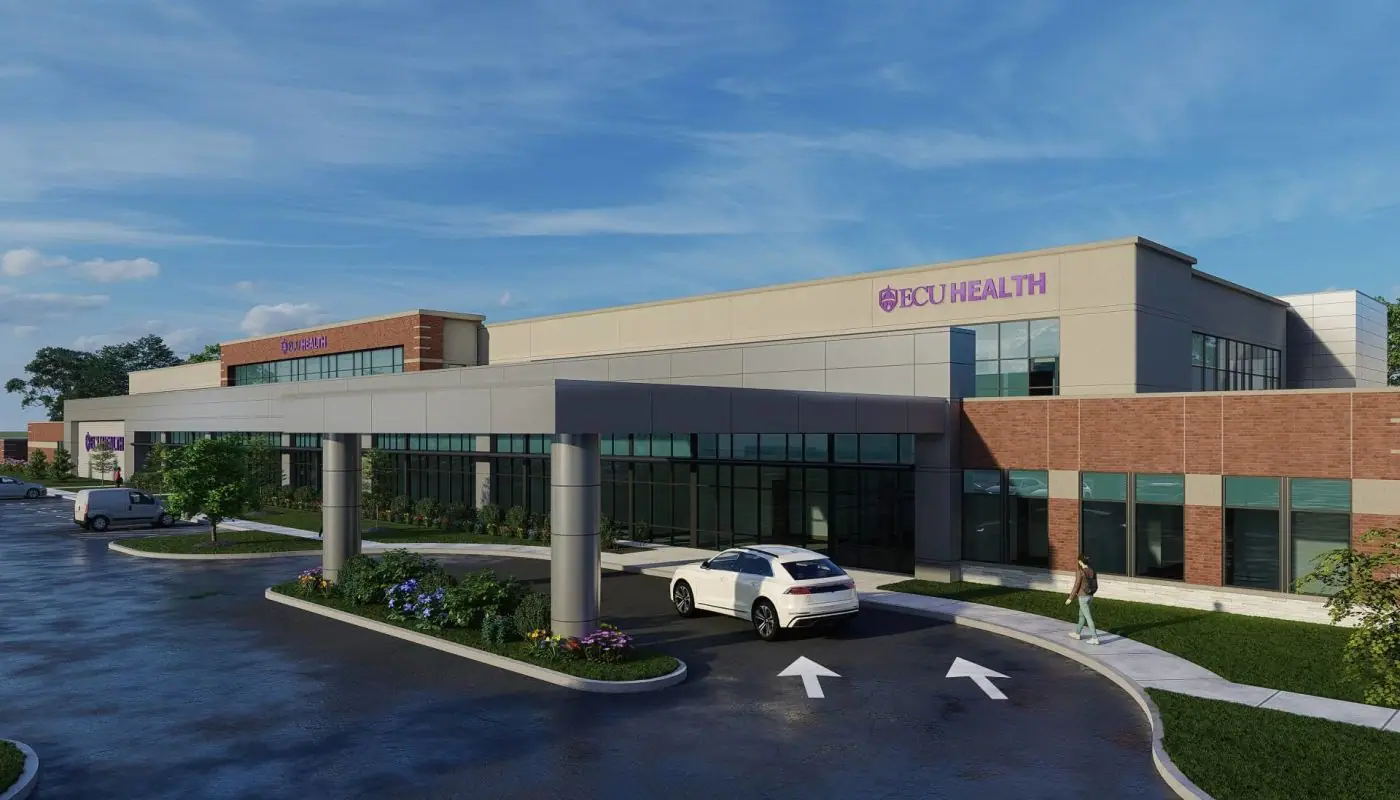
ECU Health Behavioral Health Hospital Greenville
ECU Health Behavioral Health Hospital Greenville is a 144-bed psychiatric hospital on MacGregor Downs Road. One of 430 SAMHSA-listed facilities in North Carolina, it serves children, teens, adults and seniors. Care runs about 90 days and includes residential rehab and outpatient support.
- Co-Occurring Mental Health
- Residential Rehab
- Outpatient
- 90 days
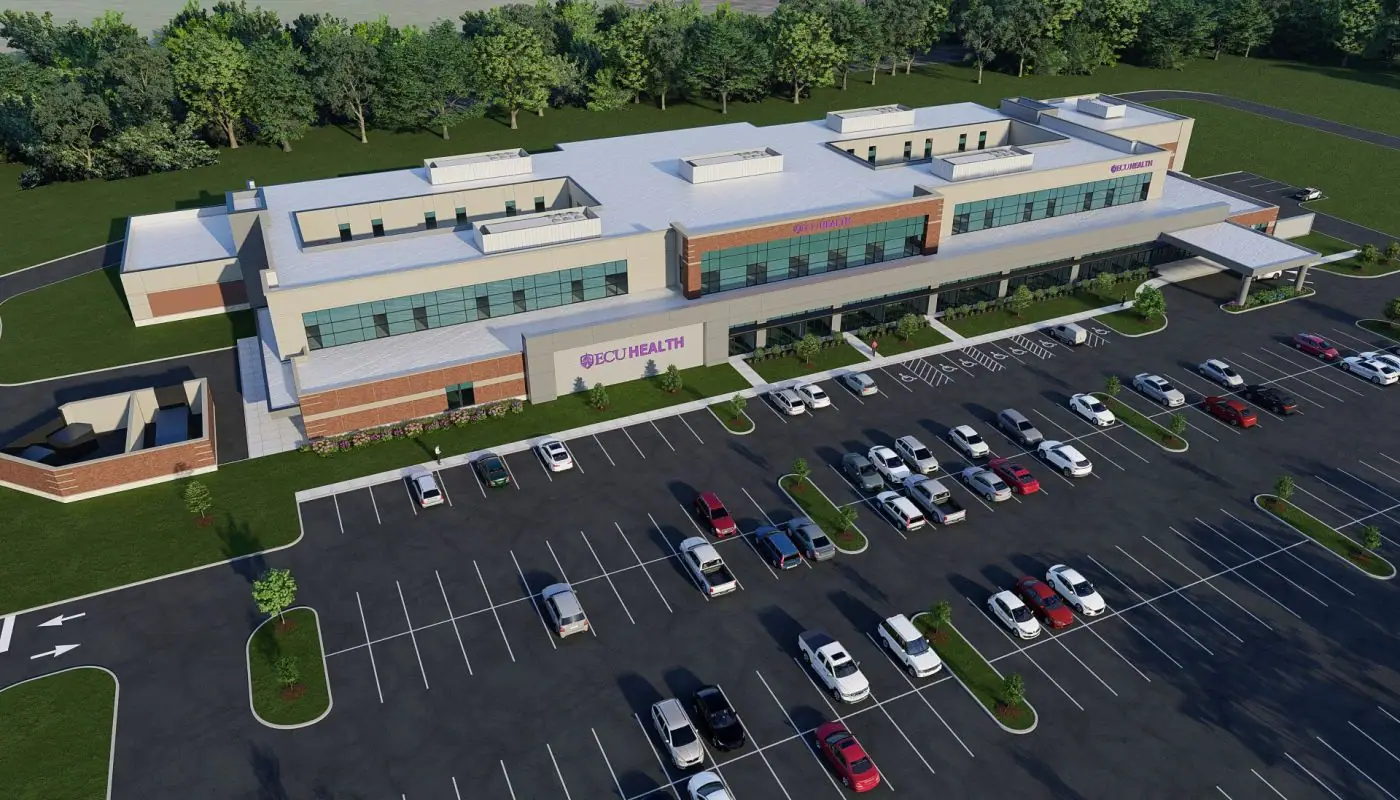
This hospital sits in Greenville, close to where Route 264 meets I-587, and its central purpose is psychiatric care rather than detox alone. It is a joint effort between ECU Health, a nonprofit health system serving the eastern part of the state, and Acadia Healthcare, a for-profit operator of behavioral health programs across the country. Together they run a 144-bed campus with separate units by age, so a child, a teenager, an adult and an older adult are each treated on a floor built for their stage of life.
At this location, addiction and psychiatric conditions are handled side by side instead of through separate tracks. Someone who uses opioids and has panic attacks, or a person with depression who also drinks heavily, works with one care team that treats both concerns together. Days typically include one-on-one and group counseling, medication management, skills-building sessions and planning for the day of discharge, and people receiving care can check their own treatment details in MyChart while they are there and once they leave.
The scope is broader than crisis care. Inpatient stays are open around the clock, and outpatient services let people step down as they stabilize. Because this is a hospital setting, it can manage severe symptoms and medical risk that a stand-alone counseling office cannot. It is also one of the larger behavioral health facilities in North Carolina, which matters when someone needs a bed quickly.
ECU Health Behavioral Health Hospital
Levels of care span residential rehab, outpatient treatment plus mental health needs alongside substance use, so a person can enter at the intensity that matches their condition. For residential rehab in North Carolina, treatment centers like this one provide 24-hour structure for those who need to be away from home triggers, while outpatient programming lets someone live at home and attend scheduled sessions. The 90-day typical length is a planning figure, not a promise, and the actual stay is set by the clinical team. If a person's psychiatric symptoms are severe, then a hospital setting can manage risks that a stand-alone counseling office cannot.
Therapy includes group therapy, dialectical behavior therapy, relapse prevention counseling, psychoeducation, cognitive behavioral therapy, individual counseling, motivational interviewing, life skills, and family therapy. The hospital describes its approach as evidence-based, individual and trauma informed. In practice, that means coping skills are taught directly, families are brought into the conversation, and past trauma gets attention rather than being set aside. Dual diagnosis treatment centers in North Carolina like this one are built to address both conditions together; if it is unclear how the two tracks work together, ask on the intake call. People looking for drug rehab in North Carolina will see that this hospital's programs pair psychiatric care with substance use treatment instead of keeping them apart.
- Dialectical Behavior Therapy
- Trauma Informed
- Relapse Prevention Counseling
- Life Skills
- Family Therapy
- Motivational Interviewing
- Evidence-Based
- Psychoeducation
- 1-on-1 Counseling
- Group Therapy
Who this hospital is built to serve
- Children and adolescents who need a protected setting with age-matched peers and school-age structure.
- Adult men and women who live with post traumatic stress disorder bipolar disorder anxiety and depression, psychosis or schizophrenia.
- Older adults whose psychiatric symptoms, medication needs or safety risks need closer watching.
- People with self-harm or suicidal thoughts who cannot be safely monitored at home.
- Individuals with alcohol, opioid, prescription drug or other substance use concerns who also have a mental health diagnosis.
Setting, length of stay and language
This is a 144-bed inpatient hospital with distinct units for children, teens, adults and seniors, so a young person is kept apart from adult patients and older adults get staff trained in their needs. Families comparing rehab centers in North Carolina should know that a usual program length of roughly 90 days is listed, with stays adjusted to each person. Services are offered in English. The campus sits in Greenville, a manageable drive from much of eastern North Carolina via Route 264 and I-587, making it easier for families to visit and take part in therapy sessions.
Funding care and verifying coverage
Cash pay rates are listed among the payment options, and insurance is reviewed case by case, so the sensible move is to call and verify benefits before admission. People considering alcohol rehab in North Carolina should ask which plans the hospital is in network with, what a residential stay would cost after the deductible, and whether outpatient visits are billed separately. North Carolina Medicaid the extent covered varies with your plan and intensity of care, and only the hospital and your insurer can say what applies in your case. If this hospital is on your list, contact your insurer and its billing office to confirm coverage before committing to anything. The helpline below puts callers in touch with licensed providers using trained advisors, costs nothing, keeps the conversation private and obligates you to nothing.
Things to confirm before you enroll
- Will my insurance pay for residential rehab at this location, and what costs remain after my deductible?
- Which unit would my child or parent be placed in, and who supervises it overnight?
- How are substance use and mental health treatment combined for someone with both?
- What does discharge planning include, and how soon is follow-up outpatient care scheduled?
- Can family join therapy sessions, and how often can they visit?

Other programs to consider
-
North Wilkesboro, NC
North Wilkesboro Comprehensive
- Outpatient
North Wilkesboro Comprehensive Treatment North Wilkesboro is an outpatient clinic for opioid use disorder.
- 30+ days program
-

Charlotte, NC
High Focus Charlotte
- Outpatient
High Focus Charlotte is an outpatient treatment center on Queens Road in Charlotte.
- 90+ days program
-
 Joint Commission
Charlotte, NC
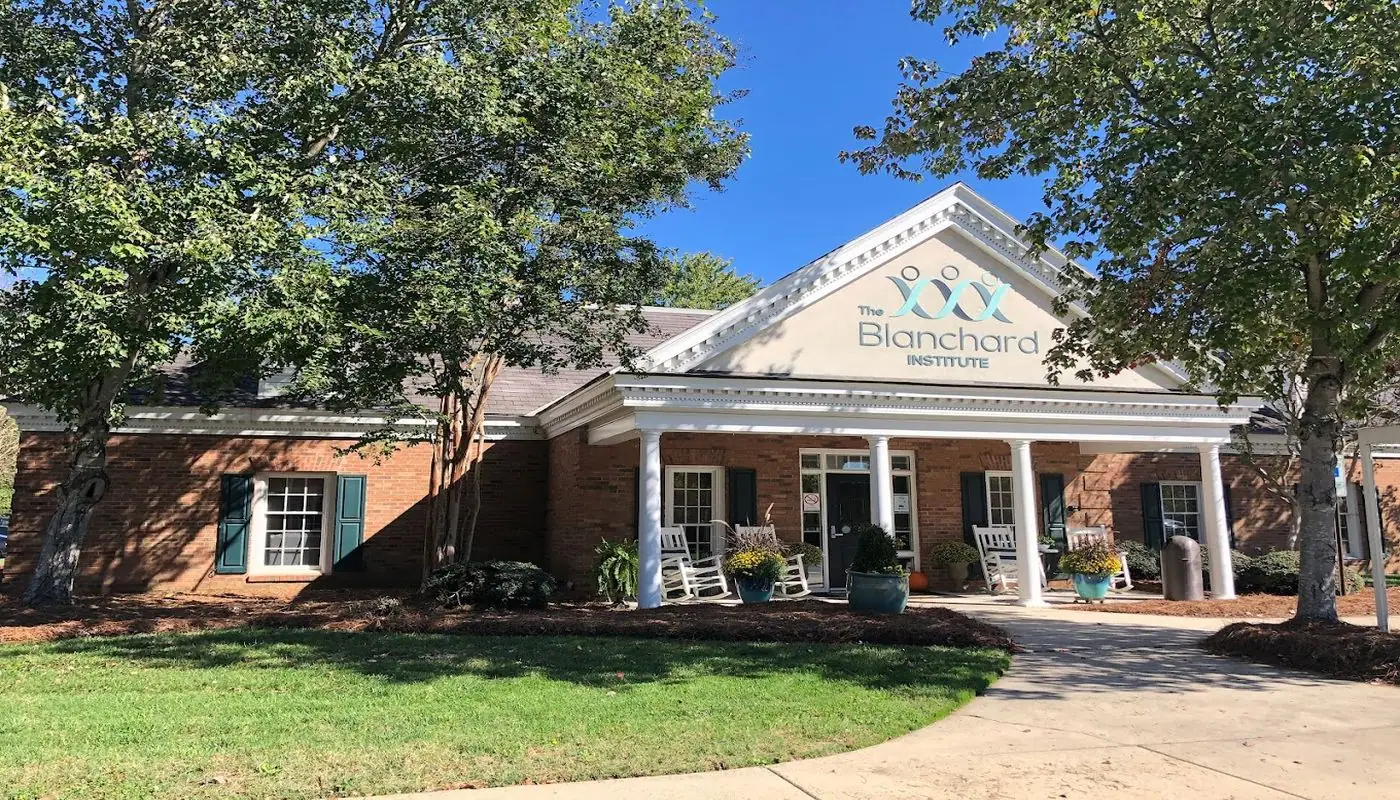
The Blanchard Institute
4.6/5231 Google reviews
- Co-Occurring Mental Health
- Outpatient
The Blanchard Institute Charlotte provides outpatient care for both mental health needs and substance use needs alongside substance misuse.
- 30 days program
-
Charlotte, NC
Grace Healing Journey
- Co-Occurring Mental Health
Grace Healing Journey Charlotte is a small Christian counseling practice in south Charlotte.
- 14+ days program
- 2-5 beds
-
Hillsborough, NC
Hillsborough Comprehensive Treatment
- Outpatient
Hillsborough Comprehensive Treatment Hillsborough provides outpatient care for opioid use disorder.
- 30+ days program
-
Brevard, NC
Tapestry Brevard
- Outpatient
Tapestry Brevard is a treatment center for women located in Brevard, North Carolina.
- 30+ days program
- 16-30 beds

FAQ
How many beds does ECU Health Behavioral Health Hospital Greenville have?
It is a 144-bed hospital, with units separated by age so children, adolescents, adults and older adults each get care suited to them. That size makes it one of the larger behavioral health facilities in North Carolina. Bed availability changes daily, so call ahead rather than assuming a spot is open, and ask which unit has room for the person you are helping.
Does NC Medicaid pay for inpatient rehab in North Carolina?
In certain cases, Medicaid may pay for inpatient behavioral health treatment, though whether it does hinges on the specific plan, the intensity of care needed and medical necessity. Cash prices are posted by this hospital, and insurance matters are reviewed individually, so call to verify your benefits prior to being admitted. Coverage or admission is not promised by anything on this page, and the ultimate decision rests with the state Medicaid program, not with this guide.
What is the usual length of stay at this Greenville hospital?
The program is listed as usually lasting 90 days, but the clinical team decides the real duration, which may be shorter or longer. Certain individuals start with residential rehab and then move to outpatient services once they are more stable. During the intake call, ask the staff what duration they anticipate for your circumstances and what might make it longer or shorter.
What should I ask about dual diagnosis treatment?
Ask how the medical team coordinates psychiatric care and substance use care in one plan, who leads each part, and how medications are reviewed. With a dual diagnosis, North Carolina treatment centers vary widely in how they combine the two, and this hospital lists co-occurring mental health among its care options. Also ask what relapse prevention counseling looks like and what aftercare follows discharge.
Where can I find behavioral health services in North Carolina?
This Greenville hospital is one possibility, and SAMHSA lists 430 facilities in North Carolina. Should you want assistance narrowing them down, trained advisors at the helpline link callers to licensed providers free of charge and without obligation. They can help you check coverage and availability at this hospital or elsewhere, and explain levels of care.
Talk it over before you commit
When you are considering treatment for yourself or a relative, the helpline is open all day and night. Advisors are trained to listen, explain the levels of care available, and help you check availability and coverage at this hospital or another option. Calling is free, stays private and puts you under no obligation to enter treatment. Withdrawal from alcohol and benzodiazepines can become medically dangerous, so involve a clinician rather than handling it on your own.